Orthodontics 101: Your Path to a Confident Smile | Advanced Orthodontics in bellevue

A great smile can transform your confidence, but it’s about more than appearances.

Orthodontics

, the dental specialty focused on correcting misaligned teeth and jaws, plays a crucial role in both oral health and aesthetics. Whether you’re considering braces for your child, exploring Invisalign for yourself, or simply curious about the process, this guide will walk you through everything you need to know.


What is Orthodontics?

Orthodontics is a branch of dentistry that addresses misalignments such as crowded teeth, overbites, underbites, and gaps. These issues aren’t just cosmetic—they can lead to difficulties in chewing, speaking, and maintaining proper oral hygiene. Left untreated, they may result in cavities, gum disease, and even jaw pain.

Orthodontic treatment

 ensures that teeth and jaws are properly aligned, improving both functionality and the overall appearance of your smile.


Types of Orthodontic Treatments

Orthodontics has come a long way from bulky, uncomfortable wire braces. Modern treatments offer personalized solutions for various needs and lifestyles:

1. Traditional Metal Braces

These braces use

braces or aligners

 and wires to gradually move teeth into their proper positions. While they’re the most recognizable option, advancements have made them smaller, more effective, and comfortable.

2. Invisalign

Popular among teens and adults, metal brackets uses clear, removable aligners to straighten teeth discreetly. These aligners are virtually invisible, making them ideal for individuals who want to maintain a natural look during treatment.

3. Lingual Braces

Placed on the inside surface of the teeth, lingual braces are hidden from view. They offer the same effectiveness as traditional braces while remaining out of sight.

4. Ceramic Braces

With brackets made from clear or tooth-colored materials, ceramic braces are less noticeable than metal ones. They’re a great option for those who want effective treatment without the bold look of traditional braces.


Why Orthodontic Treatment Matters

Orthodontics isn’t just about achieving straight teeth. It’s about enhancing your quality of life by improving oral health and confidence. Here are a few key benefits:

  • Improved Oral Hygiene: Aligned teeth are easier to clean, reducing the risk of cavities and gum disease.
  • Better Functionality: Correct alignment improves chewing and speaking efficiency.
  • Enhanced Appearance: A straighter smile boosts self-esteem and leaves a lasting positive impression.
  • Preventative Care: Early intervention can prevent long-term dental issues like tooth wear, jaw strain, and tooth loss.


Orthodontic Treatment for Every Age

Orthodontic care is not limited by age. Whether you’re 7 or 70, there’s a treatment option for you:

For Children

Orthodontic evaluation is recommended by age 7. Early treatment helps address problems like overcrowding or bite issues before they become severe.

For Teenagers

The teenage years are the most common time for braces or Invisalign. Treatment during this phase can leverage growth spurts to ensure optimal results.

For Adults

It’s never too late for orthodontics! With discreet options like Invisalign and Orthodontics, adults can align their teeth without disrupting their lifestyles.


The Orthodontic Process

1. Initial Consultation

Your orthodontist will evaluate your teeth and jaw alignment, discuss your goals, and recommend the best treatment option.

2. Personalized Treatment Plan

A detailed plan is created, outlining the duration and steps of your treatment.

3. Fitting Braces or Aligners

Your Orthodontic treatment will be customized and fitted, and your orthodontist will guide you on care routines.

4. Regular Adjustments

Periodic appointments (every 6-8 weeks) ensure steady progress as your teeth shift into place.

5. Retention Phase

After active treatment, retainers are used to maintain your new smile.

Common Questions

  • How long does treatment take?
    Duration varies by case but typically lasts 12-24 months.
  • Is treatment painful?
    Some discomfort is normal after adjustments but subsides quickly.
  • Can I play sports with braces?
    Yes, but it’s important to wear a mouthguard for protection.


Take the First Step Toward a Healthier Smile

Orthodontics is about more than aesthetics—it’s an investment in your health and confidence. Whether for a child, teen, or adult, orthodontic care offers solutions that fit every need and lifestyle.

Ready to transform your smile? Schedule a consultation with a local orthodontist today and start your journey toward a healthier, more confident you.

Don’t keep this information to yourself—share it with friends or family who might be considering orthodontic treatment. A beautiful smile is worth it!


What does personal injuries mean in the legal space?

What Does Personal Injuries Mean in the Legal Space?

In the legal context, “personal injuries” refers to harm that an individual suffers due to the negligence or wrongful Actions of another party. As noted by the Munley Law Glossary, personal injury cases encompass a wide range of incidents, including accidents, medical malpractice, product liability, and intentional acts. These legal claims enable individuals to seek compensation for physical, emotional, and financial damages incurred as a result of their injuries.

Understanding Personal Injury Law

Personal injury law is a branch of civil law that allows injured parties to seek compensation for damages caused by the negligence of others. The primary objective is to restore the injured person, as much as possible, to their pre-injury state through financial compensation. Personal injury cases can arise from various situations, including:

Automobile Accidents: Collisions between vehicles are one of the most common sources of personal injury claims. These accidents may result from negligent driving behaviors such as speeding, distracted driving, or driving under the influence of drugs or alcohol.

Slip and Fall Accidents: Property owners have a legal obligation to maintain safe premises. If someone slips and falls due to hazardous conditions, they may file a personal injury claim against the property owner for damages.

Medical Malpractice: When healthcare professionals fail to provide an appropriate standard of care, leading to injury or harm to a patient, they may be held liable for medical malpractice.

Product Liability: Manufacturers and sellers can be held responsible for injuries caused by defective or dangerous products. This includes issues such as Design flaws, manufacturing defects, or inadequate warnings.

Assault and Battery: Intentional acts of harm, such as physical assault, can also fall under personal injury law. Victims of such acts may seek compensation for their injuries through civil claims.

Types of Personal Injuries

Personal injuries can vary widely in nature and severity. Some common types include:

Physical Injuries: These encompass a range of physical harm, including fractures, soft tissue injuries, head injuries, and spinal cord injuries. The severity of the injury can significantly impact the amount of compensation sought.

Emotional Distress: Victims of personal injuries may also experience emotional or psychological trauma as a result of their injuries. This can include anxiety, depression, and post-traumatic stress disorder (PTSD). In many cases, emotional distress can be a compensable element of a personal injury claim.

Loss of Earning Capacity: If an injury prevents a person from working or diminishes their ability to earn a living, they may be entitled to compensation for lost wages and future earning capacity.

Legal Process for Personal Injury Claims

The legal process for pursuing a personal injury claim typically involves several key steps:

Consultation: Victims often start by consulting with a personal injury attorney who can evaluate the merits of their case and provide guidance on how to proceed.

Investigation: The attorney will investigate the incident, gathering evidence such as police reports, medical records, witness statements, and photographs of the scene.

Filing a Claim: Once sufficient evidence is collected, the attorney will file a formal claim with the appropriate insurance company or, if necessary, initiate a lawsuit in court.

Negotiation: Many personal injury cases are settled before reaching trial. Negotiations may take place between the injured party’s attorney and the insurance company to reach a fair settlement.

Trial: If a settlement cannot be reached, the case may go to trial. During the trial, both sides will present their evidence, and a judge or jury will determine liability and compensation.

Burden of Proof in Personal Injury Cases

In personal injury cases, the injured party (the plaintiff) bears the burden of proof. This means they must demonstrate that the other party (the defendant) acted negligently and that this negligence directly caused their injuries. The standard of proof in civil cases is “preponderance of the evidence,” meaning the plaintiff must show that it is more likely than not that the defendant’s actions led to the injury.

Compensation for Personal Injuries

Victims of personal injuries may seek various forms of compensation, including:

  • Medical Expenses: Coverage for current and future medical bills related to the injury.
  • Lost Wages: Compensation for income lost during recovery and potential future earning capacity.
  • Pain and Suffering: Damages for the physical pain and emotional distress caused by the injury.
  • Property Damage: Reimbursement for damaged property resulting from the incident.

Picking the Best Divorce Attorney in Leighton Buzzard Region: An Extensive Manual

Steering through the dissolution of marriage can be an emotionally challenging and convoluted procedure. We can help

Franklins

It entails making critical decisions that can influence your future and that of your loved ones.

This is why finding the right divorce lawyer in Leighton Buzzard Region, who can assist you during the intricate maze of family law, becomes paramount.

In this detailed guide, we’ll examine crucial components to ponder when opting for a divorce lawyer, making sure you have the assistance and knowledge necessary for your venture.

Understanding Law Pertaining to Families Counsel Family law includes a diverse array of matters, from spousal disagreements to custody of children and property division. Call Us

Franklins Divorce & Family Law Leighton Buzzard

A proficient family attorney in Leighton Buzzard Region will offer you customized advice, guaranteeing your rights and interests are preserved. It’s essential to opt for a lawyer who specializes in family law, as they will have a comprehensive comprehension of the nuances and newest advancements in this area.

The Importance of Specialization in Child Custody and Marital Property Division Two of the most difficult facets of divorce are custody of children and marital property division. These issues require not just legal knowledge but a profound sense of compassion and comprehension. Look for a attorney who has a history of managing comparable matters successfully.

Their knowledge can make a significant difference in achieving a desirable result, particularly when it comes to negotiating the complexities of child custody agreements and ensuring a just marital property division.

Navigating the Separation Process For some, a separation agreement may precede the decision to divorce. 

This procedure itself can be intricate and requires meticulous legal maneuvering. Your chosen family solicitor should be able to explain the implications of legal separation in Leighton Buzzard Region, including how it influences your assets, custody arrangements, and future divorce proceedings. 

Understanding the Legal Separation Process can provide clearness and prepare you for the measures ahead.

Financial Matters: Alimony and Legal Aid Financial matters are often at the forefront of divorce proceedings. Spousal support, also known as spousal maintenance, can be a critical component. An skilled attorney will assist you understand your entitlements or obligations pertaining to spousal support, based on your unique situation.

Additionally, they should inform you about alternatives for financial assistance for legal services, if your case warrants financial assistance for legal services.

The Role of The Family Court and Resolution Your divorce attorney should be familiar in working with The Court in Leighton Buzzard Region. Their acquaintance with court procedures and personnel can impact the effectiveness and result of your case. Furthermore, if you opt for a more amicable settlement, guarantee your attorney is a member of or acquainted with conflict resolution.

This body is dedicated to resolving family legal issues matters in a positive and peaceful manner. Choosing a Nearby Leighton Buzzard Area Solicitor: Why It Matters Selecting a local solicitor has many advantages. They will have specialized knowledge of regional laws and regulations and be readily available for meetings and court dates.

A Community solicitor like Andrew Isaacs Law recognizes the community and can offer personalized and compassionate advice during this difficult time.

Contacts Us

divorce lawyer Leighton buzzard

What does appeal mean in the legal space?

What does appeal mean in the legal space?

In the legal space, an “appeal” is a process by which a party in a legal case requests a higher court to review and change the decision of a lower court. Appeals are a fundamental aspect of the judicial system, providing a mechanism for correcting errors, ensuring fairness, and developing legal precedents. The Munley Law Glossary, a comprehensive resource for legal terminology, offers clear explanations of what an appeal involves and how it functions within the broader legal framework.

What is an Appeal?

An appeal occurs when a party who is dissatisfied with the outcome of a trial or legal decision asks a higher court to examine the case and consider reversing or modifying the lower court’s judgment. The party filing the appeal is known as the appellant, while the opposing party is referred to as the appellee or respondent.

It’s important to understand that an appeal is not a new trial. The appellate court does not re-hear the case in its entirety or accept new evidence. Instead, the court reviews the proceedings of the lower court to determine whether legal errors were made that could have affected the outcome of the case. If the appellate court finds such errors, it may overturn the decision, modify the judgment, or remand the case back to the lower court for further proceedings.

The Appeal Process

The appeal process typically involves several key steps:

Filing a Notice of Appeal: The first step in the appeal process is for the appellant to file a notice of appeal with the court that issued the original decision. This notice must be filed within a specific timeframe, usually set by law, after the judgment has been entered.

Preparation of the Record: The record on appeal includes all the documents, evidence, and transcripts from the trial court proceedings. This record is essential for the appellate court’s review, as it provides the basis for evaluating the appeal.

Appellate Briefs: Both parties submit written briefs to the appellate court. The appellant’s brief outlines the legal errors they believe occurred during the trial and argues why the decision should be reversed or modified. The appellee’s brief responds to these arguments, defending the lower court’s ruling.

Oral Argument: In some cases, the appellate court may hold an oral argument, where attorneys for both parties present their cases and answer questions from the judges. This allows the judges to clarify points and probe the arguments more deeply.

The Court’s Decision: After reviewing the record and considering the briefs and oral arguments, the appellate court will issue a written decision. This decision could affirm the lower court’s ruling, reverse it, modify it, or remand the case for further proceedings.

Types of Appeals

There are different types of appeals, depending on the nature of the case and the court involved:

Civil Appeals: These involve disputes between private parties over issues such as contracts, property, or personal injury. Either party can appeal the decision if they believe the trial court made a legal error.

Criminal Appeals: In criminal cases, the defendant may appeal a conviction or sentence. The prosecution, however, is generally limited in its ability to appeal a not-guilty verdict due to double jeopardy protections.

Administrative Appeals: These occur when a party seeks to challenge the decision of a government agency in an appellate court. This might involve issues like social security benefits, immigration, or employment disputes.

Grounds for Appeal

Not every unfavorable decision is grounds for an appeal. Appeals are typically based on legal errors that occurred during the trial, such as:

Misapplication of the Law: If the trial court applied the wrong legal standard or misunderstood the law, this could be grounds for an appeal.

Procedural Errors: Mistakes in the way the trial was conducted, such as improper admission of evidence, jury instructions, or lack of due process, can also justify an appeal.

Insufficient Evidence: In some cases, an appellant may argue that the evidence presented at trial was insufficient to support the verdict.

Judicial Misconduct: If a judge displayed bias or acted inappropriately, this could be a reason to appeal the decision.

The Role of Munley Law Glossary

The Munley Law Glossary is a valuable resource for those seeking to understand legal concepts, including the appeal process. By providing clear and concise definitions, the glossary helps demystify complex legal terms, making the legal system more accessible to the general public and those involved in legal proceedings.

An appeal is a crucial legal process that allows for the review and correction of trial court decisions. It ensures that errors can be addressed and that justice is upheld. Whether you’re involved in a civil, criminal, or administrative case, understanding the appeal process is vital to protecting your legal rights. The Munley Law Glossary serves as an excellent tool for deepening your understanding of appeals and other legal concepts, empowering you to navigate the complexities of the legal system with greater confidence.

Categories Uncategorized

What does appeal mean in the legal space?

What does appeal mean in the legal space?

In the legal space, an “appeal” is a process by which a party in a legal case requests a higher court to review and change the decision of a lower court. Appeals are a fundamental aspect of the judicial system, providing a mechanism for correcting errors, ensuring fairness, and developing legal precedents. The Munley Law Glossary, a comprehensive resource for legal terminology, offers clear explanations of what an appeal involves and how it functions within the broader legal framework.

What is an Appeal?

An appeal occurs when a party who is dissatisfied with the outcome of a trial or legal decision asks a higher court to examine the case and consider reversing or modifying the lower court’s judgment. The party filing the appeal is known as the appellant, while the opposing party is referred to as the appellee or respondent.

It’s important to understand that an appeal is not a new trial. The appellate court does not re-hear the case in its entirety or accept new evidence. Instead, the court reviews the proceedings of the lower court to determine whether legal errors were made that could have affected the outcome of the case. If the appellate court finds such errors, it may overturn the decision, modify the judgment, or remand the case back to the lower court for further proceedings.

The Appeal Process

The appeal process typically involves several key steps:

Filing a Notice of Appeal: The first step in the appeal process is for the appellant to file a notice of appeal with the court that issued the original decision. This notice must be filed within a specific timeframe, usually set by law, after the judgment has been entered.

Preparation of the Record: The record on appeal includes all the documents, evidence, and transcripts from the trial court proceedings. This record is essential for the appellate court’s review, as it provides the basis for evaluating the appeal.

Appellate Briefs: Both parties submit written briefs to the appellate court. The appellant’s brief outlines the legal errors they believe occurred during the trial and argues why the decision should be reversed or modified. The appellee’s brief responds to these arguments, defending the lower court’s ruling.

Oral Argument: In some cases, the appellate court may hold an oral argument, where attorneys for both parties present their cases and answer questions from the judges. This allows the judges to clarify points and probe the arguments more deeply.

The Court’s Decision: After reviewing the record and considering the briefs and oral arguments, the appellate court will issue a written decision. This decision could affirm the lower court’s ruling, reverse it, modify it, or remand the case for further proceedings.

Types of Appeals

There are different types of appeals, depending on the nature of the case and the court involved:

Civil Appeals: These involve disputes between private parties over issues such as contracts, property, or personal injury. Either party can appeal the decision if they believe the trial court made a legal error.

Criminal Appeals: In criminal cases, the defendant may appeal a conviction or sentence. The prosecution, however, is generally limited in its ability to appeal a not-guilty verdict due to double jeopardy protections.

Administrative Appeals: These occur when a party seeks to challenge the decision of a government agency in an appellate court. This might involve issues like social security Benefits, immigration, or employment disputes.

Grounds for Appeal

Not every unfavorable decision is grounds for an appeal. Appeals are typically based on legal errors that occurred during the trial, such as:

Misapplication of the Law: If the trial court applied the wrong legal standard or misunderstood the law, this could be grounds for an appeal.

Procedural Errors: Mistakes in the way the trial was conducted, such as improper admission of evidence, jury instructions, or lack of due process, can also justify an appeal.

Insufficient Evidence: In some cases, an appellant may argue that the evidence presented at trial was insufficient to support the verdict.

Judicial Misconduct: If a judge displayed bias or acted inappropriately, this could be a reason to appeal the decision.

The Role of Munley Law Glossary

The Munley Law Glossary is a valuable resource for those seeking to understand legal concepts, including the appeal process. By providing clear and concise definitions, the glossary helps demystify complex legal terms, making the legal system more accessible to the general public and those involved in legal proceedings.

An appeal is a crucial legal process that allows for the review and correction of trial court decisions. It ensures that errors can be addressed and that justice is upheld. Whether you’re involved in a civil, criminal, or administrative case, understanding the appeal process is vital to protecting your legal rights. The Munley Law Glossary serves as an excellent tool for deepening your understanding of appeals and other legal concepts, empowering you to navigate the complexities of the legal system with greater confidence.

What does economic damages mean in the legal space?

What does economic damages mean in the legal space?

In the legal space, “economic damages” refer to financial compensation awarded to a plaintiff to cover quantifiable financial losses incurred as a result of an injury or wrongdoing. According to the Munley Law Glossary, economic damages are designed to reimburse the injured party for actual monetary losses and expenses directly related to the incident.

Understanding Economic Damages

Economic damages are intended to address tangible and measurable financial impacts resulting from an accident or injury. They typically include:

Medical Expenses: Compensation for the Costs of medical treatment, including hospital bills, surgeries, medications, physical therapy, and any future medical care required due to the injury.

Lost Wages: Reimbursement for income lost due to the inability to work as a result of the injury. This includes wages, salaries, and any other employment benefits that are lost during recovery.

Loss of Earning Capacity: If the injury results in a long-term or permanent reduction in the ability to earn income, compensation may be awarded for future lost earning potential.

Property Damage: Compensation for damage to personal property, such as a vehicle in a car accident, including repair or replacement costs.

Out-of-Pocket Expenses: Reimbursement for other direct costs incurred due to the injury, such as transportation costs for medical appointments or modifications needed in the home due to the injury.

Legal Implications of Economic Damages

Economic damages are an important component of personal injury and other legal claims, as they address the financial burden imposed on the injured party. Key aspects include:

Quantifiability: Economic damages are calculated based on objective evidence and documentation, such as medical bills, pay stubs, and repair invoices.

Documentation: Claimants must provide detailed records and evidence to Support their claims for economic damages, including receipts, bills, and financial statements.

Limitations: In some jurisdictions, there may be caps or limits on the amount of economic damages that can be awarded, particularly in certain types of cases or under specific legal frameworks.

Comparative Fault: In cases where the injured party is partially at fault for the incident, economic damages may be reduced in proportion to their degree of responsibility.

Proving Economic Damages in Legal Cases

To successfully claim economic damages, plaintiffs must demonstrate the direct financial impact of their injury or loss. Evidence used to support claims includes:

  • Medical Records: Detailed documentation of medical treatments, procedures, and associated costs.
  • Employment Records: Proof of lost wages and income, such as pay stubs and employer statements.
  • Repair Estimates: Quotes or invoices for property damage repair or replacement.
  • Expense Receipts: Receipts for out-of-pocket expenses related to the injury.

Legal Defenses and Challenges

Defendants may challenge claims for economic damages by:

  • Disputing Evidence: Arguing that the evidence provided does not accurately reflect the actual losses or expenses.
  • Questioning Necessity: Contending that some claimed expenses were not necessary or directly related to the injury.
  • Comparative Fault: Asserting that the plaintiff’s own actions contributed to the financial losses, potentially reducing the amount of economic damages awarded.

Role of Munley Law Glossary

The Munley Law Glossary offers valuable definitions and explanations of legal terms related to economic damages. Understanding these terms is crucial for navigating legal claims and ensuring accurate compensation for financial losses.

Economic damages are a fundamental aspect of legal claims, providing compensation for quantifiable financial losses resulting from an injury or wrongdoing. They cover medical expenses, lost wages, property damage, and other direct financial impacts. Accurate documentation and evidence are essential for claiming economic damages, and resources like the Munley Law Glossary can help clarify legal terms and procedures related to these claims.


Protecting Your Rights with a Medical Malpractice Lawyer

Why Medical Malpractice Demands Your Attention

Medical malpractice is not just a headline; it’s a harsh reality that affects thousands of lives every year. Imagine going to a healthcare professional expecting care, only to experience negligence that results in serious harm or even death. When medical standards are not met, a Medical Malpractice Lawyer becomes your most crucial ally in navigating this complex landscape. These lawyers are the gatekeepers of justice, helping victims and their families secure compensation and hold negligent parties accountable. For those seeking to understand more about

understanding medical errorsr

, this information is essential.

The Unseen Impact of Medical Malpractice

The consequences of medical malpractice are often severe, affecting not just the patient but their loved ones as well. From misdiagnosis to surgical errors, the ramifications can be life-changing. Here’s why medical malpractice matters:

  • Permanent Injury: Many victims suffer irreversible damage, such as paralysis or brain injury, due to medical negligence.
  • Financial Burden: The cost of ongoing medical care, coupled with lost wages, can be overwhelming.
  • Emotional Trauma: The psychological impact on victims and their families cannot be overstated.

When the unthinkable happens, a Medical Malpractice Lawyer is your advocate, ensuring that justice is served and that negligent parties are held accountable.

Common Types of Medical Malpractice: What You Need to Know

Understanding the various types of medical malpractice is essential in identifying whether you or a loved one may have been a victim. Each type has its own set of consequences, and knowing them can guide you in seeking the help of a Medical Malpractice Lawyer.

Misdiagnosis and Delayed Diagnosis: The Silent Dangers

Misdiagnosis occurs when a healthcare professional incorrectly identifies a condition, while delayed diagnosis happens when there is a significant delay in diagnosing a medical issue. Both can lead to severe consequences:

  1. Wrong Treatment: A misdiagnosis often leads to inappropriate treatment, which can worsen the patient’s condition.
  2. Progression of Disease: Delayed diagnosis can allow a condition to progress unchecked, leading to more severe outcomes.
  3. Unnecessary Procedures: Patients may undergo unnecessary surgeries or treatments due to a misdiagnosis.

Seeking the expertise of a Medical Malpractice Lawyer is crucial if you suspect a diagnosis error has impacted your health. It’s crucial to consider the importance of

experienced malpractice lawyerr

in similar situations.

Surgical Errors: When the Operating Room Becomes a Danger Zone

Surgical errors are among the most devastating types of medical malpractice. These errors can occur due to negligence or lack of proper care, leading to:

  • Wrong-Site Surgery: Operating on the wrong part of the body is a catastrophic error with long-term consequences.
  • Anesthesia Mishaps: Incorrect administration of anesthesia can lead to severe complications or even death.
  • Retained Surgical Instruments: Leaving instruments inside a patient can cause infections, additional surgeries, or worse.

A Medical Malpractice Lawyer is indispensable in these situations, guiding you through the legal process to ensure that your rights are protected.

Prescription Mistakes: The Hidden Threat in Your Medicine Cabinet

Prescription errors are more common than you might think, and they can have deadly consequences. These mistakes include:

  • Incorrect Dosage: Too much or too little of a medication can lead to adverse reactions or treatment failure.
  • Drug Interactions: Failure to consider other medications a patient is taking can result in harmful interactions.
  • Wrong Medication: Administering the wrong drug can be fatal, especially in critical care situations.

If you’ve suffered due to a prescription error, a Medical Malpractice Lawyer can help you pursue compensation for your suffering.

The Role of a Medical Malpractice Lawyer in Your Fight for Justice

When faced with the aftermath of medical malpractice, knowing your legal options is crucial. A Medical Malpractice Lawyer plays a pivotal role in ensuring that justice is served.

How a Medical Malpractice Lawyer Evaluates Your Case

One of the first steps in pursuing a malpractice claim is a thorough evaluation of your case by a Medical Malpractice Lawyer. This process includes:

  1. Reviewing Medical Records: Your lawyer will meticulously review your medical records to identify any deviations from standard care.
  2. Consulting Medical Experts: A Medical Malpractice Lawyer often works with medical experts to assess whether negligence occurred.
  3. Determining Liability: Identifying who is liable, whether it’s a doctor, nurse, or hospital, is crucial in building a strong case.

Navigating the Complex Legal Process with a Medical Malpractice Lawyer

The legal process in a medical malpractice case is often intricate, but a Medical Malpractice Lawyer will guide you through each step:

  • Filing the Claim: Your lawyer will handle the paperwork and ensure that your claim is filed within the legal time frame.
  • Negotiating Settlements: Many cases are settled out of court. A skilled Medical Malpractice Lawyer will negotiate on your behalf to secure the best possible outcome.
  • Going to Trial: If a settlement cannot be reached, your lawyer will represent you in court, presenting a compelling case to secure the compensation you deserve.

If you’re dealing with

legal process in malpractice casesr

, this could be a vital resource.

Additional Resources and FAQs: Empowering Yourself with Knowledge

To fully understand your rights and the role of a Medical Malpractice Lawyer, here are some common questions and answers:

FAQ: What Are My First Steps if I Suspect Medical Malpractice?

If you suspect medical malpractice, the first step is to consult a Medical Malpractice Lawyer immediately. Collect all relevant medical records and document any interactions with healthcare providers.

FAQ: How Do I Know If I Have a Valid Medical Malpractice Claim?

A Medical Malpractice Lawyer will help determine if your claim is valid by assessing whether the care you received deviated from accepted medical standards.

FAQ: What Compensation Can I Expect from a Medical Malpractice Lawsuit?

Compensation in a medical malpractice lawsuit can cover medical expenses, lost wages, pain and suffering, and in some cases, punitive damages. Your Medical Malpractice Lawyer will fight to ensure you receive the maximum compensation possible.

What Should I Look for When Choosing a Medical Malpractice Lawyer?

When choosing a Medical Malpractice Lawyer, look for someone with experience, a proven track record of success, and the ability to communicate effectively. Your lawyer should also have a strong network of medical experts who can provide testimony in your case.

Conclusion: Taking the Next Step with a Medical Malpractice Lawyer

Medical malpractice is a serious issue that can have lasting effects on your life. However, with the right Medical Malpractice Lawyer by your side, you can fight for justice and secure the compensation you deserve. Don’t let negligence go unpunished—take action today and protect your rights. Understanding medical records review can make a significant difference in your case.

Rolex Replica Watches: Evaluating the Leading Producers of 1:1 Quality Super Clones

Rolex watches are known for their top-notch craftsmanship and exclusivity. This has led to a big market for high-quality replica watches, called “super clones.” We’ll look into Rolex replica watches and find out who makes the best ones. These super clones look and work just like the real Rolex watches.Key TakeawaysDiscover the top manufacturers of 1:1 quality Rolex super clone watchesLearn to distinguish between genuine Rolex timepieces and high-quality replicasUnderstand the features and pricing of the best super clone watches on the marketExplore the allure and appeal of luxury watch replicas for discerning consumersGain insights to make informed purchasing decisions when shopping for Rolex replica watchesUnderstanding the World of Replica WatchesIn the world of luxury watches, Rolex watches are unmatched in their charm. They are more than just accessories; they show status, skill, and a taste for the finer things in life. This popularity has led to many luxury watch replicas, making it hard to tell real from fake.The Allure of Luxury TimepiecesRolex watches are famous for their classic Design, top-notch quality, and perfect precision. They have a history of over a century, making them the ultimate symbol of luxury and rarity. Their detailed engineering, high-quality materials, and careful finishing win the hearts of watch lovers everywhere.Distinguishing Replicas from Genuine WatchesIt can be tough to tell authentic vs replica Rolex watches, even for experts. Replica watches now look and work very much like the real thing. But, there are ways to spot a fake Rolex watch. Look for the materials used, the movement’s precision, and the finishing touches.Learning to spot these differences is key to protecting the luxury watch market. It helps collectors and fans buy luxury watch replicas that are true to the Rolex spirit.Exploring the Best Super Clone Watches on the MarketLooking for the best Rolex replica watches is a big deal for many fans. These replicas are made to look and feel like the real thing but are much more affordable. We’ll look at the top makers of Rolex super clone watches. We’ll check out their features, prices, and quality to help you choose wisely.Swiss Watch company and Replica World are leading the way in making Rolex super clones. They’re experts at copying the real Rolex’s look and feel. If you want a Submariner, Daytona, or Day-Date, these watches are perfect. They’re so real, even experts will be impressed.When picking the best Rolex replica watches, think about the movement, materials, and details. Great super clones have Swiss-made automatic movements and tough sapphire crystals. They also have cases that are either stainless steel or gold-plated, just like the originals. Choosing these features means your Rolex super clone will not only look great but also work well and last long.FAQWhat are the key features that distinguish authentic Rolex watches from high-quality replicas?Authentic Rolex watches stand out with their top-notch craftsmanship and precision. They use only the best materials. You’ll notice the fine details on the dial, the smooth crown and bezel, and the watch’s weight and feel. They also have a unique serial number and official papers to prove they’re real.How can I identify the best super clone Rolex watches on the market?Look for super clone Rolex watches that look, work, and feel like the real thing. Great replicas use similar materials and movements for a perfect copy. Check the engraved serial numbers, the bezel’s smoothness, and the watch’s weight and feel.What factors should I consider when purchasing a replica Rolex watch?Think about the maker’s reputation, the materials used, the movement’s accuracy, and the details. Be cautious of prices that seem too low, as they might mean a lower quality or fake watch. Make sure to check the return and warranty policies for your protection.How do the prices of high-quality Rolex super clones compare to the genuine article?High-quality Rolex super clones are much cheaper than the real thing. They can cost from a few hundred to over $800. This makes them a great choice for those who want luxury style without the high price tag.What are the potential risks associated with purchasing replica Rolex watches?Buying replica Rolex watches can lead to getting fake or low-quality items. These might not look or work like the real thing and could be unsafe or illegal. You could also lose money if the watch is bad or the seller is not reliable. Always buy from trusted sources to avoid these problems.

Exploring Nature: Best Hiking Trails in the Italian Alps

As you lace up your hiking boots and prepare to set off on a journey through the Italian Alps, you’ll find yourself surrounded by a world of unparalleled beauty and serenity. The trails in this majestic region offer a mix of awe-inspiring landscapes and diverse terrain that will challenge and reward you in equal measure. From the rugged peaks of the Dolomites to the tranquil valleys of the Aosta region, each trail beckons with promises of adventure and discovery. Ready to experience the wonders that await you in these breathtaking mountains?

Scenic Trails in the Dolomites

Nestled within the Dolomites are some of the most breathtaking hiking trails you’ll ever experience. One such trail is the Alta Via 1, a route that winds through dramatic limestone peaks, lush meadows dotted with vibrant wildflowers, and crystal-clear alpine lakes. As you trek along this path, you’ll be treated to panoramic views that will leave you in awe of the sheer beauty that surrounds you.

Another must-visit trail is the Tre Cime di Lavaredo loop. This iconic circuit takes you around the famous Three Peaks, offering unparalleled vistas of these towering rock formations against the backdrop of the vast sky. The rugged terrain challenges you as you navigate through rocky passages and verdant valleys, adding an element of adventure to your hike.

Whether you’re a seasoned hiker or a novice explorer, the Dolomites offer a range of trails that cater to all skill levels. Each step you take in this picturesque landscape is a step closer to discovering the wonders of the natural world.

Challenging Routes in Gran Paradiso

For those seeking a thrilling adventure amidst rugged landscapes, the challenging routes in Gran Paradiso promise an exhilarating experience like no other. As you set out on these trails, you’ll find yourself surrounded by towering peaks, lush alpine meadows, and icy glaciers that will test your endurance and determination.

One of the most demanding routes in Gran Paradiso is the ascent to the summit itself. The trail is steep and rocky, requiring a good level of fitness and mountaineering skills. However, the reward of reaching the top and gazing at the breathtaking panoramic views makes every step worth it.

Another challenging route is the Alta Via No. 2, a long-distance trek that takes you through remote valleys and high mountain passes. The changing terrain and unpredictable weather add an element of unpredictability to the journey, making it a true adventure for those seeking a challenge.

Hidden Gems of the Aosta Valley

Discover the Aosta Valley’s hidden gems, where enchanting vistas and untouched landscapes await adventurous travelers. Venture off the beaten path to explore the secluded beauty of Cogne Valley, a haven for nature enthusiasts seeking tranquility.

Follow the Lillaz Waterfall trail, where cascading waters create a mesmerizing spectacle against the backdrop of towering cliffs. As you hike through alpine meadows adorned with vibrant wildflowers, the scent of fresh mountain air invigorates your senses.

Continue your exploration to the charming village of Champorcher, nestled in a picturesque valley surrounded by snow-capped peaks. The Mont Avic Natural Park offers a paradise for wildlife lovers, with the chance to spot elusive alpine ibex and chamois roaming freely. Immerse yourself in the peaceful atmosphere of this hidden gem, where the harmony between nature and man is truly palpable.

Reveal the treasures of Aosta Valley’s lesser-known trails, where each step uncovers a new wonder waiting to be discovered. Embrace the serenity of these untouched landscapes and create unforgettable memories in this off-the-beaten-path destination.

Embark on Your Alpine Adventure

Exploring the breathtaking beauty of the Italian Alps is an unforgettable experience. Whether you’re a seasoned hiker or a casual nature enthusiast, the diverse trails offer something for everyone. As you plan your trip, consider staying in a charming villa that perfectly complements your outdoor Adventures. For a more in-depth look at the best accommodations and tips for an amazing stay, read our detailed article on villa rental northern italy. Start planning your journey and immerse yourself in the natural splendor of the Italian Alps.

Pool Covers: Essential Tips for Maintenance and Safety

Owning a swimming pool can be a delight, but it also comes with responsibilities. Pool covers play a crucial role in pool safety and maintenance. They help prevent accidents, especially involving children, by forming a barrier between the pool water and the outside. This is essential for families, as it provides peace of mind knowing that extra measures are in place to keep everyone safe.

A pool covered with a blue tarp, surrounded by a fence and lounge chairs. The sun shines down on the still water, creating a serene atmosphere

In regions like South Africa, water conservation is a significant concern. Using a pool cover helps reduce water evaporation, saving both water and money in the long run. Additionally, pool covers help maintain water temperature and keep out debris, making pool maintenance easier and more efficient.

Pool covers are an investment that pays off in safety, savings, and convenience. By keeping the pool clean and reducing the need for frequent refills, they make pool ownership more enjoyable and sustainable.

Understanding Pool Covers

A pool cover is being pulled taut across the water's surface, securing it in place. The edges are fastened securely to the pool's perimeter, creating a clean and smooth appearance

Pool covers are essential for keeping swimming pools clean, regulating temperature, and improving safety. The quality and durability of a pool cover depend greatly on its type and material.

Types and Designs

There are various types of pool covers available. Automatic covers are convenient as they can be operated with a switch, making them ideal for daily use. They come in a range of designs and colours to match the aesthetics of swimming pools.

Thermal blankets help in maintaining the pool’s temperature, which is crucial in cooler climates. These covers are usually lightweight and easy to handle. The correct pool cover design should fit the pool’s shape perfectly, ensuring it functions efficiently.

Material Quality and Durability

The choice of material affects the pool cover’s longevity and performance. Vinyl covers are popular for their strength and durability. They resist UV rays and can handle harsh Weather conditions, providing protection for several years.

Mesh covers are another option, known for allowing water drainage while keeping out debris. These covers do not burden the pool structure and last longer when maintained correctly. Always check the manufacturer’s guidelines to ensure you choose a durable and high-quality product.

Installation and Maintenance

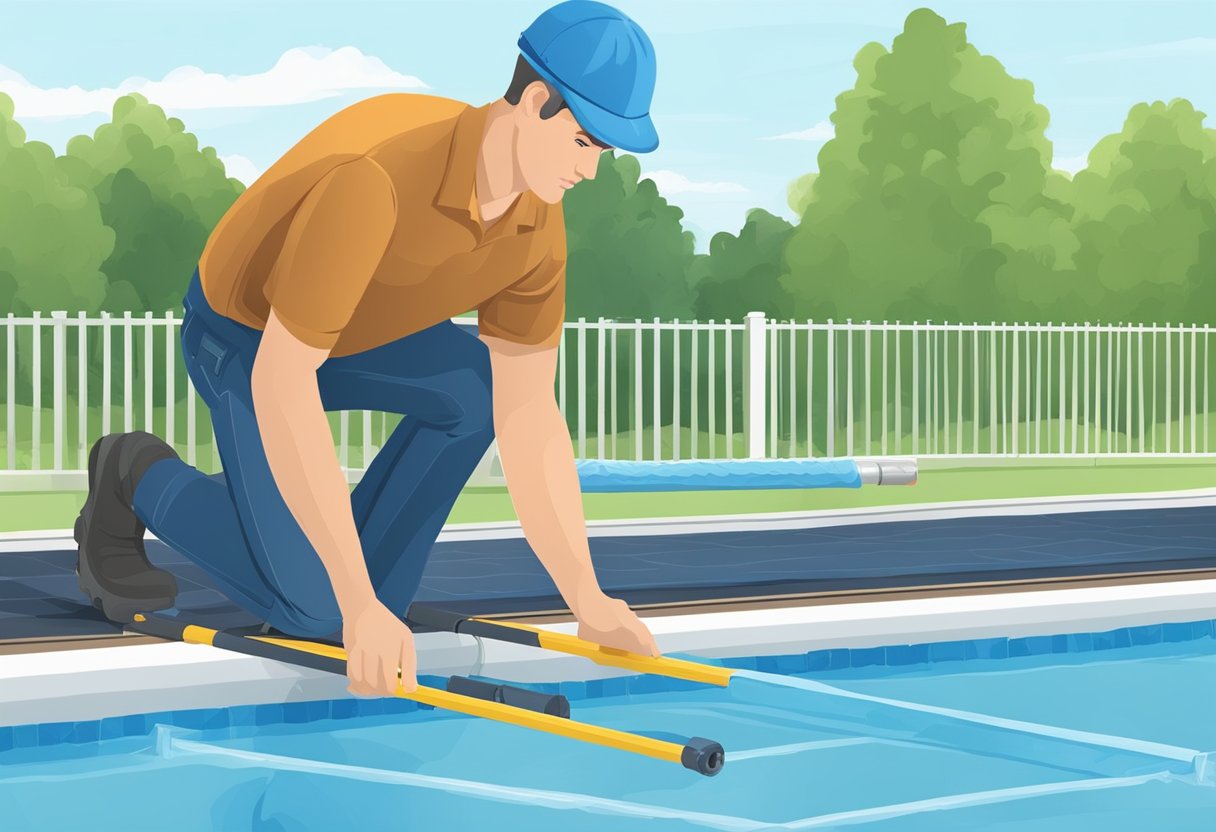
A technician installs pool cover with a roller system. Another technician performs maintenance on the cover mechanism

Pool covers play a crucial role in maintaining the cleanliness and safety of your swimming pool. Key factors to consider include ensuring the covers fit perfectly, proper installation, and regular cleaning to extend their lifespan.

Measuring and Custom Orders

First, it is important to accurately measure your pool to ensure the cover fits snugly. The pool shape should be noted to tailor the cover to the specific dimensions. Custom orders are often available and highly recommended for irregularly shaped pools. Proper measurements should include the pool’s length, width, and any unique features. Be sure to contact customer service for guidance on measuring accurately. Some companies offer on-site measuring services, which can be very helpful.

Installation and Support

Installing a pool cover can be a straightforward process if done correctly. Begin by ensuring the cover is appropriate for your pool’s dimensions. The cover may come with a manual or installation support from the supplier. Use tools like roll-up stations to ease the process. Installation customer support is available through many suppliers, offering help via telephone or chat services. Ensure all safety devices are securely in place to prevent accidents. Sales and customer support can assist if further help is needed.

Cleaning and Conservation

Maintaining your pool cover is vital for its longevity. Regularly clean the cover to remove dirt, leaves, and other debris. This prevents unnecessary wear and tear. Use mild soap and water for cleaning to avoid damaging the material. Conservation is also crucial: pool covers help save water by reducing evaporation. Proper maintenance ensures the cover remains functional and effective at conserving water. If the cover requires extensive cleaning or repair, contact the supplier’s customer service for advice and support. This maintenance will save time and effort in the long run.

https://poolcover.co.za/pooldeck-slatted-automatic-covers/

https://poolcover.co.za/poollock-hydraulic-automatic-safety-cover/

https://poolcover.co.za/